Movie Review: Riots and Police Shootings Make "Les Misérables" Timely (and Sadly Timeless)
No, we’re not talking about the musical this time.
The Bee Gees may have done it first, but The Rapture and Calvin Harris still released their own songs called "How Deep Is Your Love" decades later. Justin Bieber saw no problem cribbing from Queen when he dropped "Somebody to Love", and fair enough, because Jefferson Airplane beat Queen to the punch with the same title in 1967. And TV Girl wasn’t fooling anyone when they released "Benny and the Jets", with a slightly different spelling to Elton John’s "Bennie and the Jets". In all these cases, usually only one song gets to 'own' its name—and it’s not always the first one out of the gate.
The point being: it can either be a massive act of hubris or prophetic confidence to brazenly reuse an already iconic title. Director Ladj Ly knew there'd be confusion when he christened his first feature Les Misérables, given the legendary Victor Hugo novel of the same name and the many musical adaptations that have followed (it’s also the rare French-language title to remain in its native tongue wherever it goes in the world, and the same goes here). However, it’s not Hugo's story that appears to primarily inspire his provocative effort; rather, he and co-writers Giordano Gederlini and Alexis Manenti take their cues from 'one bad day' cop flicks Training Day and The Raid, and even Spike Lee’s incendiary Do the Right Thing, albeit without the same bite. Compelling and relevant, Les Misérables is nonetheless the same old song.
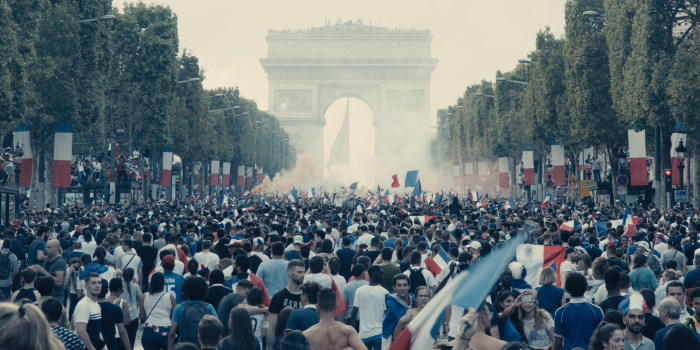
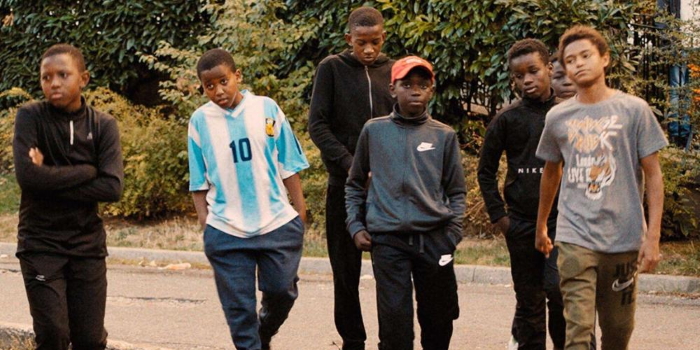
It begins with the people of Paris flooding the streets, waving the French flag, not in celebration of revolution but the French victory at the 2018 FIFA World Cup. The party vibe dissipates as we settle into the narrative proper, with new-in-town police officer Ruiz (Damien Bonnard) being shown the ropes by menacing white cop Chris (Alexis Manenti) and his Black partner Gwada (Djebril Zonga). Over an increasingly stressful afternoon, Ruiz is introduced to the criminal element in the Montfermeil social estate, where young, impressionable children are drawn to mentors of dubious intentions, or alternately abused and tormented by Chris and Gwada. Eventually, the theft of a lion cub from a travelling circus sends the cops into the projects looking for the teen culprit, and as tensions flare, a firearm is discharged, captured on a drone's camera, leaving the police scrambling to cover their tracks.
Of course, as we’ve seen from the recent shootings of Black men and women in the US by officers of the law, and long understood, firearms don't simply discharge themselves; they are decisively fired. Les Misérables doesn’t excuse this action, but attempts to show what leads police to it—morally unsatisfactory as the explanation may be. Questions about Ladj Ly’s affiliations are quieted by the stunning finale, in which the decision to tell this tale from the perspective of the police is justified. Without spoiling anything, let’s simply say this film’s rendering of Victor Hugo’s Gavroche finally gets his revenge.
That’s not the only connection to Hugo’s tale of French poverty and revolution. As noted during the movie, Hugo wrote Les Misérables in Montfermeil. (Ly grew up there too.) And just like that story—which also included a police officer who could not reconcile the idea of crime being driven by class inequity—Ly’s picture demonstrates what drives the oppressed to tear down their own homes in rage. With vision of riots fuelled by racist police forces and shootings of unarmed Black citizens among 2020’s most prominent images, Les Misérables is as timely as it is depressingly timeless.
Still, it’s all pretty cinematically familiar, in structure and execution, despite Ly’s lived-in comfort with the setting (and especially the performances of the child actors). The trio of cops are templates that could have been torn from any other cop flick, though perhaps that’s the point. More fascinating are the people living in Montfermeil who remain an enigma, largely because it’s never clear if the descriptions provided by Chris and Gwada to Ruiz are accurate or prejudiced. Again, the reason for this mystery and uncertainty is made clear by the misdirect of an ending, which indeed detonates to impressive effect. However, there’s no mistaking which Les Misérables will be remembered by the ages.
3.5/5
In select Australian cinemas now. Rated MA15+ for strong coarse language.
Header Image: Rialto Distribution
Topics
Ref: ed0c9d24-e564-4b0a-b7cb-ac2500377141

Most Popular



Comments & Feedback
Share your opinion
Emoji cheatsheet Formatting Comment guidelines
This is movie that i loved