Movie Review: Loving
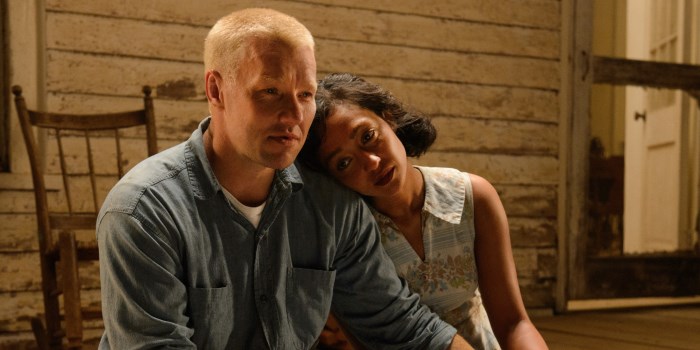
A true tale of bygone marital discrimination comes to Australian cinemas as our nation continues to wrestle with the Marriage Act and its limitations.
That doesn’t make Loving timely only for Australian viewers. In America, with President Donald J. Trump hoping to stack the Supreme Court in a more conservative fashion, and with hate crimes on the rise, this tale of a white man and a black woman attempting to express their love for one another despite legal obstructions (and open vitriol) reminds that history could well be repeating.
Writer-director Jeff Nichols, who has already made a quiet movie about the apocalypse (Take Shelter), a quiet movie about alien invaders (Midnight Special) and a quiet movie about a shirtless Matthew McConaughey (Mud), is even more understated here.
The real-life relationship between Richard Loving (yes, that’s his name) and Mildred Jeter offered no fireworks, nor was the decision of Loving v. Virginia preceded by a barnstorming monologue that roused the Supreme Court to overturn the state laws prohibiting interracial marriage. Loving does not contrive any show-stopping moments; it does not take advantage of poetic licence—like so many ‘based on a true story’ biopics before it—to make the tale more cinematically compelling.
In fact, the biggest gut-punch of the film comes via text at the very end, informing viewers of what happened next.
It may mean the movie itself doesn’t quite pack the wallop we’ve grown accustomed to through other, more emotionally manipulative features. But Nichols’ insistence on not compromising the story mirrors his subjects, especially Joel Edgerton’s soft-spoken Richard Loving. Both men just want to get on with their jobs.
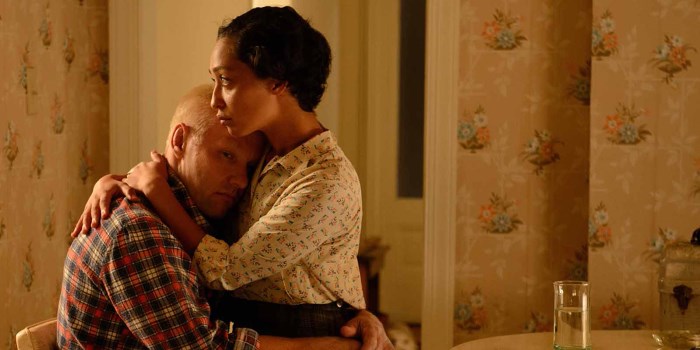
Ruth Negga, as Mildred, does much of the talking for both of them. After she discovers she’s pregnant to Richard, the two of them decide to wed, even though they’ll be flaunting the laws of Virginia circa 1958. After driving to Washington to marry, they’re eventually pulled from their Virginia home by the police force and sentenced to prison, unless they agree to leave the state.
In Washington, they build a family; however, their ties to Virginia keep nipping at them (more so than any sense of righteous indignation). Keen to raise her children alongside her extended relatives, Mildred urges Richard to return home, supported only by the loose promises of the ACLU’s untested lawyer Bernie Cohen (Nick Kroll, not quite making the full transition from genius comic actor to natural dramatic performer). He wants to use them as the basis for an anti-miscegenation case that could undo some of America’s prehistoric laws. The Lovings, meanwhile, simply want to live their lives.
Warm, understated performers—including, briefly, Michael Shannon, as a LIFE photographer who creates the iconic images of the Lovings still referred to today—breathe life into Nichols’ sun-drenched yet otherwise sober picture.
The tale is moving, and you wouldn’t want it told with any more bells and whistles, but it’ll leave you wanting more. The good news is that you’ll want more of Jeff Nichols.
3.5/5
In cinemas March 16, 2017. Rated PG for mild themes and coarse language.
Photo: E One
Topics
Ref: a617ba21-aa53-4df9-88d5-a7080057a804





Comments & Feedback
Share your opinion
Emoji cheatsheet Formatting Comment guidelines