Is It Illegal to Download and Share Copies of Textbooks in Australia? An Investigation
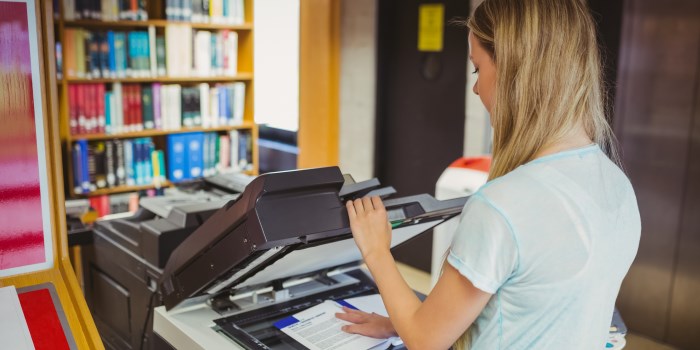
Most students don’t think it’s illegal to copy or torrent textbooks. Are they right?
This post is presented in partnership with the Australian Publishers Association.
Student life gets pretty pricey. (That’s literally the reason Student Edge was founded, so we get it). It’s no wonder young people turn to lives of crime to save a dollar here and there.
No, we’re not talking about glamorous crime, like Ocean’s Eight-style heists, or even unglamorous crime. We’re talking about the most banal—and probably most common—kind: illegal downloading. And photocopying!
Our market research arm YouthInsight surveyed 600 Australia students aged 17 – 24 and found that four out of five students had downloaded some form of proprietary owned content without paying for it (like movies or music), primarily because they believed it was just too expensive.
Two in five students also said they had downloaded textbooks without paying for them, and approximately 62 per cent of students don’t think (or don't know) it’s illegal to digitally share copies of their textbooks among friends. Unfortunately, it’s mad illegal.
Wait, what?
According to Commonwealth law, documented by the Copyright Act 1968, it is unlawful to photocopy a whole textbook—or take photos of every page, even though that would take a ridic amount of time, so why would you?—and share it with friends, whether you own a copy or not. And you definitely aren’t allowed to upload a scanned version online, or download one without having purchased it.
See, copyright law attempts to protect copyright owners of creative works like movies, music, video games, computer programs, sound recordings and texts. And though you probably figured movies and music were copyrighted, as well as most books, the Copyright Act specifically describes "literary works" as including "a table or compilation, expressed in words, figures or symbols" and "a computer program or compilation of compute programs". You better believe "textbooks" fall under that category.
(Remember: We are not lawyers, so be sure to do additional reading and seek actual legal advice if you reckon you’ve breached copyright law.)
Can I even photocopy a textbook at the library then?
If it’s at least ten pages long, you can reproduce—for the purpose of research or study—no more than a "reasonable portion", meaning 10 per cent of the number of pages in the edition, or, if the work is divided into chapters, a single chapter. If it’s been published online, you can only reproduce 10 per cent of the number of words in the work, or, if divided into chapters, a single chapter. That’s how educational institutes can get away with sharing certain chunks from textbooks. It’s called "fair dealing" and is usually specified for those undertaking research or study.
However, if you see your institution sharing multiple copies of a textbook and think, "so shall I!", it’s important to note they likely have permission of the copyright owner or are following the rules set by the Copyright Act, which gives schools and TAFE institutes leeway. That is, if they’re doing it legally.
What if I reckon I have a good reason for copying or downloading something without paying for it?
There are circumstances that define whether or not what you’ve copied is fair, and the Copyright Act outlines those for you. (Read that thing!) However, a good rule of thumb is: if the copyright owner is selling the work at "an ordinary commercial price" and you can get it at the time in which you need it, the law applies.
The argument that an item is too expensive, or you wouldn’t receive it in time for an assignment probably won’t hold much water. You can try it, sure, but this law works to protect copyright holders; to give them an incentive to, you know, create more stuff without getting ripped off.
What are the potential punishments?
That depends! It’s important to remember that copyright is automatic in Australia; as soon as something is written or recorded—not even necessarily published—copyright belongs to the creator. Just because something doesn’t have the © symbol on it doesn’t mean you can go wild with the scanner.
Copyright also lasts for 70 years after the author has died. With that in mind, if you infringe upon copyright by copying or downloading without purchasing legally, the copyright owner can bring legal action against you. If they’ve died, their estate can do it on the deceased’s behalf (in case you thought you could outsmart the dead). The court may decide on damages you’d have to pay, or an account of profits.
(Remember: Again, we are not lawyers, so be sure to do additional reading and seek actual legal advice if you’re concerned.)
Is it really that expensive to buy a textbook?
It’s highly unlikely students are stealing textbook or proprietary educational content just for the dizzying thrill of the theft. As we found in our survey, most do it because of costs, with 'saving money' the top goal among students (55 per cent); that's larger than even those who are aiming for 'high grades' (43 per cent).
The good news is Student Edge members can save on textbooks with an additional 6% off all books at Angus and Robertson and an additional 6% off Booktopia online. Good luck out there!
Header Image: iStock.com/Wavebreakmedia
Topics
Ref: 5c42e9b3-9df7-4d4e-899d-a981006ef619



Comments & Feedback
Share your opinion
Emoji cheatsheet Formatting Comment guidelines