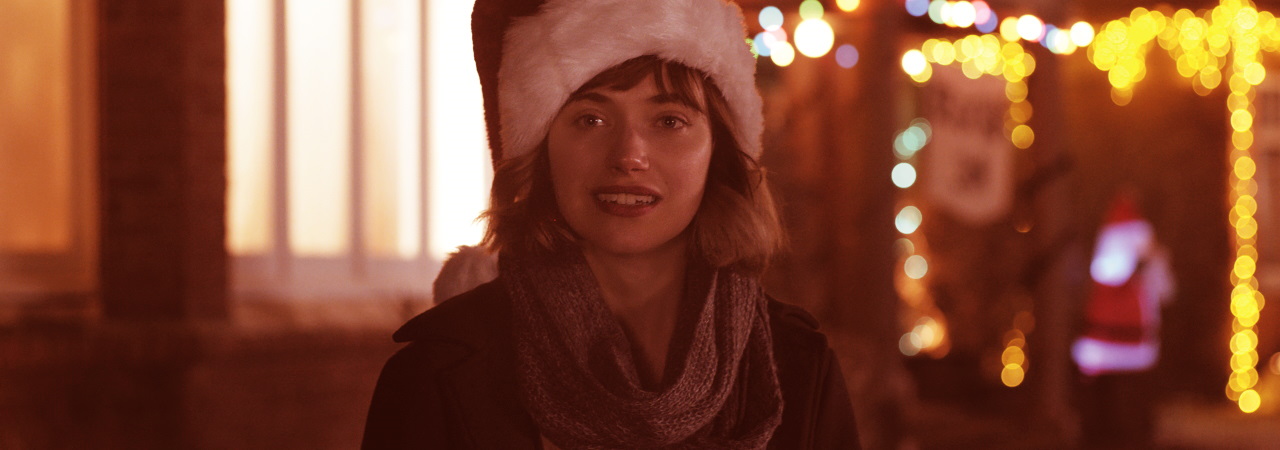
Imogen Poots on Fighting the Patriarchy in Slasher Flick "Black Christmas"
Imogen Poots fled from zombies in 28 Weeks Later, battled neo-Nazis in Green Room, staked vamps in Fright Night, and now, in Black Christmas, fights the most terrifying enemy of all: frat bros.
As Riley Stone, in the second remake of the iconic '70s slasher flick, she and her sorority sisters are stalked by a murderous cloaked figure at their college; a stand-in for rape culture on campus.
"I’m sure it’ll resonate with people because it doesn’t take much to open up a newspaper and see an example of what the film is tapping into, and I think campus rape culture [in America] is really common, unfortunately," she tells Student Edge.
"I think it highlights how the reinforcement of categorising gender isn’t necessarily a great thing. I also think there are female characters in it who are complicit with the patriarchy in the way that there are men in the film who are rebelling against it. So, I think it’s important we have that nuance. Ultimately it’s a really fun subversion of the slasher genre, but it’s like a trojan horse inside."
For those of us in Australia (and even the British Poots), the nature of American universities—divided into fraternities for men and sororities for women—seems unusual and alien.
In fact, their recruitment videos alone feel like horrific short films.
"I think the idea of categorisation in general in that way, it’s really bizarre," Poots says.
"I was never really envious of them growing up, because I think clubs in general are very suspicious."
Black Christmas is her second recent film to tackle toxic masculinity, following this year’s The Art of Self Defence, though this one comes from a female director: Sophia Takal.
"I knew that whatever she was gonna do was gonna be interesting, and she isn’t afraid to lean into the kind of corniness with a movie like this, which I think is really cool," Poots says.
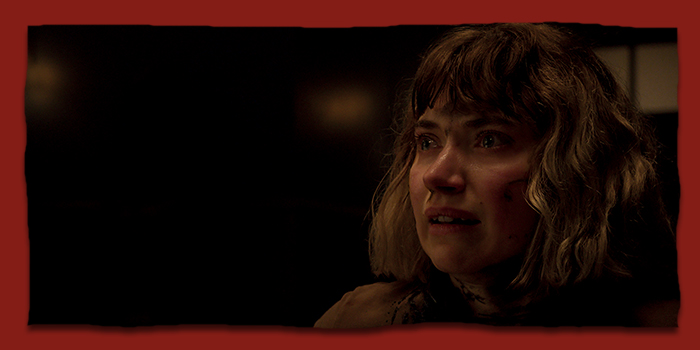
"She was really helpful with mapping the journey of my character, especially as Riley’s very passive; she’s in a paralysis because of traumatic events, and she’s trying to figure out if she can regain her voice. I found Sophia so valuable in navigating that, and uncompromising."
However, Imogen warns against categorising female and male directors too.
"It doesn’t change anything just because it’s a female director; that would imply there’s something that a male director could do that Sophia couldn’t, or vice versa," she explains.
Nonetheless, she says it made the set "more feminine" by having a female director, and she finds it refreshing to not to be asked about "male-female chemistry", given the film's largely female cast.
But the question remains: Which of her on-screen villains was the hardest to tackle?
"I suppose in the sense of the strain on your psyche, as an actor, the ones with the high emotional turmoil are certainly tiring, but more than that, having a prosthetic," she laughs.
"On Fright Night we all had a lot of prosthetics; a lot of green face makeup and stop-motion capture, and lots and lots of blood.
"So yeah, they’re pretty tiring, but at the end of the day, we’re not getting up to throw garbage in the back of a truck, so it’s a pretty laid back job in comparison."
Black Christmas arrives in Australian cinemas on 12 December.
Header Image: Universal Pictures