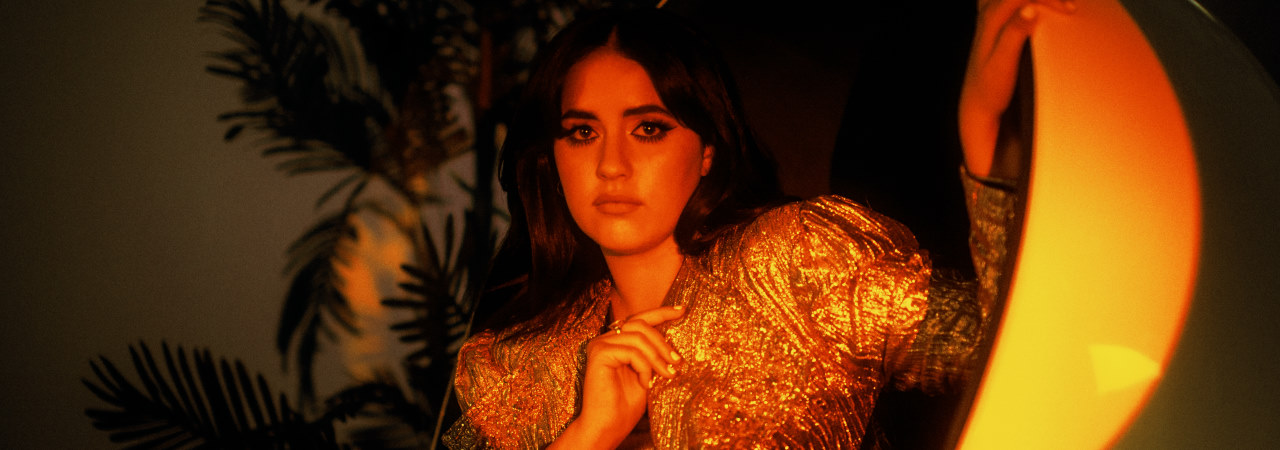
“I Wasn’t Feeling My Best Self”: How Tia Gostelow Made “Chrysalis” in a Crisis
Tia Gostelow has grown up a lot since being named the first winner of Unearthed High’s Indigenous Initiative in 2016.
Her broody and beautifully reflective debut album Thick Skin—released in 2018—solidified her place as one of Australia’s most electrifying musical acts. Featuring her Gold-certified single “Strangers”, it also scored her countless sold out shows across the country.
However, as Tia tells Student Edge over the phone, the 21-year-old had written a bunch of the songs on Thick Skin when she was only a teen. Naturally, she has evolved both musically and personally since then—and sees less of herself on it now, compared to her vulnerable new release Chrysalis, which explores loneliness, anxiety and self-acceptance.
“I love the songs on Thick Skin, and they hold a close spot to my heart,” she says.
“It was my first album and the first songs that kind of put me on the map. But there were songs on the album that I’d written when I was 15 or 16.
“By the time that album cycle was over, I was kind of sick of playing the same songs and musically I was changing what I was listening to.”
Of course, Tia’s taste in music wasn’t the only thing changing in her life. Between relocating from the regional Queensland town of Mackay to Brisbane by herself in early 2018 and heading on her first European tour the following year, she was feeling overwhelmingly homesick.
“I was really struggling with being away from my family and living in Brisbane. I was by myself for about six months and I became really lonely and really homesick,” she says.
“[Going over to Europe] was a massive wakeup call for me to make sure I’m looking after my mental health and how it can physically impact you.
“I lost my voice over there and I ended up having to cancel shows. It made me realise that I can’t keep comparing myself to other artists.”
Despite the challenges, Tia highlights how the transformative period inspired her to write her sophomore album Chrysalis, which debuted in the top spot on the 100% Independent Albums chart.
“When I was writing, I was writing about those feelings of being lonely and being away from my partner as well. Lyrically, that’s pretty much where all of Chrysalis came from,” she says.
“It was a time where I wasn’t feeling my best self and struggling to be away from everyone that I loved.”
Tia explains how she settled on the title Chrysalis, which reflects “a transitional state”, after discovering it by using a synonym generator.
“I had all these words that related to ‘Chrysalis’ and how I felt when I was writing the album, and I kind of just put it into a synonym generator on the internet,” she says.
“Chrysalis was one of the first answers that came up. It instantly drew me in, but I sat on it for a while because I thought, surely it can’t be this easy to figure out a title?
“I couldn’t find anything else that summed up the album better than that word.”
It’s certainly a fitting title, considering Chrysalis represents an evolution in Tia’s career. The retro synth sounds accompanied by her self-assured vocals on tracks like “Psycho” and “Two Lovers” make for perfect dance bops.
Tia points out how contrasting the upbeat disco vibes with melancholy lyrics helped her navigate the anxiety she was experiencing at the time. “Never thought I’d be this far from home/ Call you when I’m feeling all alone,” Tia sings on her vibrant and upbeat track “Wonder”.
“I didn’t realise how sad the lyrics were until I had to pick some lyrics to put on some shirts,” she laughs.
As the singer tells us, growing older has also helped her gain a stronger sense of her Indigenous identity.
“When I was 16 and thrown into this music thing, it was something I didn’t really understand, and I didn’t want to talk about it,” she says.
“Now that I’m older and I’ve had more time to learn about my family, it’s something I really want to put forward in my career.”
As Tia tells us, she believes everything she has experienced over the past few years—both good and bad—has made her into the musician she is today.
“It was a bump in the road, and it was something I had to go through to create something like [Chrysalis],” she says.
“It’s hard to realise in the moment that it’s something that’s going to pass, but it does, and it really does make you who you are.”
Header Image: Supplied