How to Stay Sustainable at School/Uni

Reduce the size of your environmental footprint.
Sometimes going to classes, studying, finishing assignments and taking tests can get really busy and you might find that you don’t have a lot of time or energy to focus on much else.
This can get really frustrating if you’re passionate about the environment and keeping your personal impact low.
However, there are some things you can do to reduce your footprint with very little effort; some swaps may even be more convenient!
So, here are our tips on how to become a more sustainable student in 2021.
Don’t buy new books.
Each semester, your university or school may ask you to buy a whole bunch of new textbooks based on the syllabus or unit outline.
Nine times out of 10 you won’t actually need all of these textbooks, at least for every class. Even if you do, it is so much cheaper to buy second-hand textbooks or to borrow them from your local library.
This is a great option so that you’re not contributing to the unnecessary printing of more paper and the emissions that it takes to create another book.
You can even purchase or rent textbooks by getting an online copy if you’re wanting to avoid using paper altogether.

Reuse old stationery.
A very popular trend at the beginning of each new school term is the excitement to buy all new pens, notebooks, post-it notes, and highlighters.
While this can be fun and make you feel super productive, it can actually be a big waste of money and resources.
Let’s be honest, stationery is not cheap and buying new pens and pencils every year only to throw last year's ones out is super wasteful.
Why not go through all your old stationery—anything you have laying around the house—and give it a new life.
Sharpen some old pencils, test those pens, keep a hold of that stack of post-it notes and tear out the used pages of a perfectly good notebook.
Of course, if there are some things that you have run out of or need to replace, feel free to replace them or find sustainable places to get second-hand stationery, but check with your stash first.
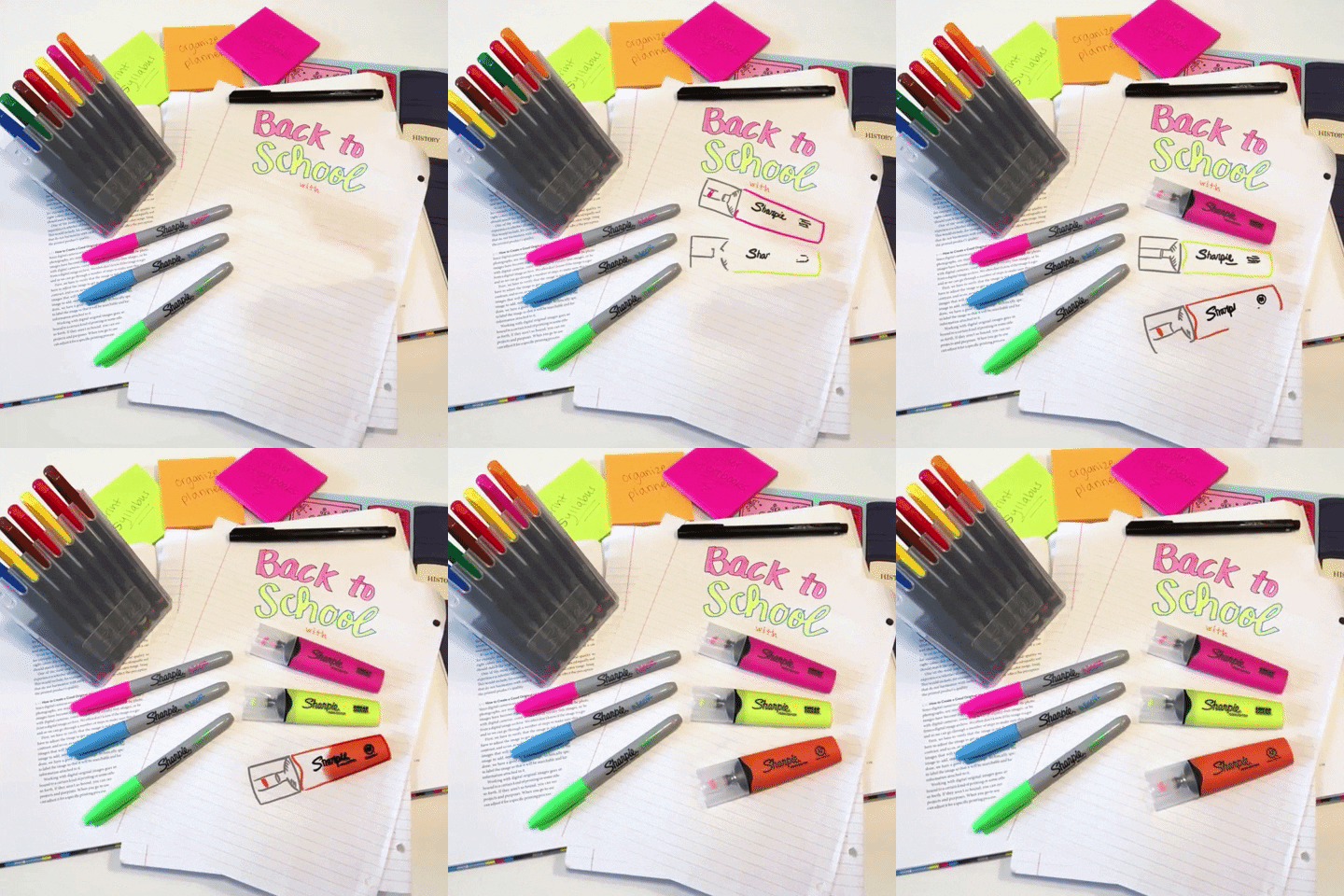
Cut down on paper.
The resources it takes to get some pieces of paper from a tree to your notebook is massive.
Of course, if using paper stationery is something that brings you joy, don’t force yourself to give it up, but if it’s something that’s just cluttering up your workspace, why not switch to a more sustainable option?
Use your laptop or a tablet to take notes and work on your assignments instead, you may even find that you end up working faster that way.

Buy refurbished tech.
If you’re in the market for a new computer, tablet or phone for study purposes, one of the most environmentally friendly options you can pick is a refurbished device.
Not only will this save you a bunch of money but it will mean that you won’t be causing more demand for new devices and all the resources it takes and emissions it causes to create and ship them.
If, however, your old tech is still in good condition, there’s no need to replace them just yet. The best option is what you already have.

Bring food and water with you to class.
Sometimes it can be so convenient to just grab a quick bite or a cool bottle of water from the uni café, but this often comes with a lot of plastic waste.
It might seem obvious but the best thing you can do in this case is to bring your lunch or snacks and water with you to class.
This is even easier if you’re studying remotely, all you have to do is avoid that tempting delivery food.

Reduce and recycle.
When you’re on campus or in class and need to throw away some clutter, make sure you’re using all the resources your education provider is making available to you.
If your school offers composting options for organics and cardboard, make that your first choice for those items, then use recycling bins for items that apply.
Of course, the best step you can take is to reduce the amount of waste you make altogether but let’s be honest, you can’t avoid everything.
Study remotely when you can.
The after-effects of 2020 now means that we live in a world where studying from home is more common than ever before.
If where you’re living still needs you to study from home or at least allows you to from time to time, take up the opportunity to reduce your carbon footprint made from commuting.
Avoiding travel will mean that you aren’t contributing to any carbon emissions by getting to class.
If you don’t have this option and need to attend lectures in person, try riding a bike or taking the bus to class. These options are much better for the environment than a car.

Reduce your carbon footprint.
While you can’t adjust the lighting and heating on campus, when you’re studying from home do your best to only use electricity when it’s needed.
Dress appropriately for the weather and keep doors closed so that you don’t need to use extra heating or cooling.
Make sure to switch off lights and electrical equipment at the wall when they are not needed or not in use. This will not only save you on your electricity bill but it will help the environment also.

Promote green initiatives and clubs.
Use your time as a student to find causes that you’re passionate about.
Join some clubs, sign petitions and promote causes that work to benefit the environment, sustainability and conservation so that you can do your bit and reduce your impact.

It’s important to remember that we can only do what we can when it comes to the environment, so it’s okay if you can’t do all of these things or if you slip up. However, we should always aim to do our best.
Now, go forth and love the planet.
Header Image: blackCAT via Getty Images
Win a $50 Mastercard eGift Card

Topics
Ref: 0d914093-eedc-4340-94d9-ac9a0070a253






Comments & Feedback
Share your opinion
Emoji cheatsheet Formatting Comment guidelines