How Everything I Thought I Knew About China Was Wrong
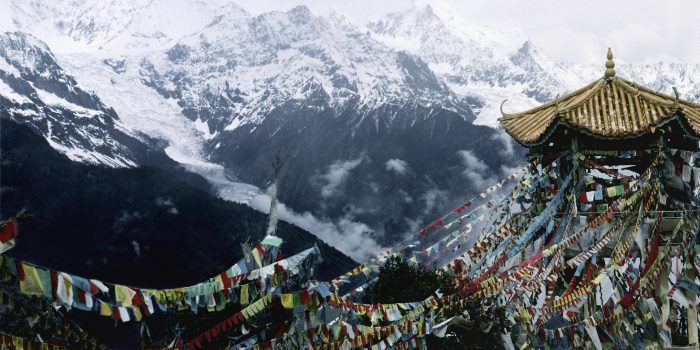
We asked members what they've learnt from other cultures. Kezia shared how her preconceptions about China were turned upside down.
“Don’t let go of your baggage, especially if someone begs you for help. It’s a common diversionary tactic.” “There’s no toilet paper in the toilets because the local people will shamelessly steal toilet paper rolls, so remember to bring your own.” “Beware of little children clinging onto your leg – once you give them money, they’ll call their entire village to come and they can be very aggressive.” Chiming every few minutes like bells, these cautionary remarks from home gradually constructed in my mind the image of a primitive, ruthless yet financially desperate culture in the land of China, where I was to stay on tour for eight days. Idly, I toyed with the mental images of a dirty, polluted country; imagined the shrill Chinese voices attempting to lure foreigners into their shops; and mentally shuddered at the door-less drop toilets to be faced. As soon as I landed, I saw I had misjudged at least the physical appearance of the place. The Yunnan province was abundantly blessed with the silhouette of snow-capped mountains lining every side, naturally forming wonders of the world like the Stone Forest; even the man-made, ornate architecture was beautiful. The roads were extremely clean, as was the crystal-clear rivers that often twined parallel to the roads and mountains (although please, don’t drink it). And as I immersed myself deeper into Chinese (and, due to the province I was in, Tibetan) culture, I began to slowly rework my initial preconceptions of it. Firstly, no Chinese people fell on their knees begging for money or attempted to pull us into their stores or even promoted their wares aggressively. Our local Chinese tour guide, whom my sister and I befriended, was bright, bubbly and strangely alike to me in terms of age and that we were both keen to study in an Australian university. Sadly, she told me, “I can’t go to university because it’s too expensive. One dollar for you is four yen for me.” Not to mention that the cost of university for international students is sky high, not including the cost of living and the cost of the plane flight. I hope one day she’ll get the opportunity to stay here with us. Secondly, I changed my adjective of “primitive” to “traditional”. Especially in Shangri-La, or the more rural areas, people still dressed in the clothes of their particular tribe or lived in traditional houses, yet they were not more primitive than I. I saw a group of young women, not far from my age, cleverly manipulating silver into delicate bangles and expounding on the clarity of jades. I also saw the elderly, still dancing their traditional dances on feet as light as feathers. The only exception to my misconceptions were the drop toilets. In retrospect, my imagination hadn’t effectively captured the entire drop toilet experience I was dreading. In a room with no lights, doors, toilet paper or running water, there was a long slit in the ground filled with, well... you know what belongs in a toilet. Around the hole, some people had missed the mark (the slit was a little narrower than a foot), but we had to put our feet somewhere. To add salt to the wound, we had to pay to use these toilets. Despite that, I learnt that Chinese culture is as rich and beautiful as I regard my own culture, despite being fed preconceptions.Congratulations to Kezia for winning this writing challenge, answering: What I Learnt From Other Cultures. Kezia wins a $50 Westfield gift card for her submission. For your chance to win, check out our latest writing challenges in our Comps section. Also, be sure to follow this guide on how to win the writing challenge!
Topics
Ref: e71b0ea0-e64f-4dc6-84f0-a591002cbbaa



Most Popular



Comments & Feedback
Share your opinion
Emoji cheatsheet Formatting Comment guidelines
While this is a lovely article, the author should keep in mind that she was in Tibet, not the PRC, and perhaps pay more acknowledgement to the fact that despite China's attempted assimilation of the Tibetan culture into its own; the myths she heard about China probably didn't apply in Tibet anyway
Hello, author here! I was definitely in China, not Tibet. I was in the northwestern part of Yunnan, in a city called Shangrila. As it is so close to the shared border, this particular part of China has been called 'a chunk of ancient and historical Tibet within Yunnan's provincial boundaries'.
While your suggestion to acknowledge China's attempted assimilation of Tibetian culture definitely sounds like a profound topic, I was 100% not in a position to write about it at the time of writing this article. (I was a high-school student who could not understand Chinese, which was the language the entire tour was in, and not educated at all on China/Tibet's political spheres.) This piece was just meant to be a lighthearted article on my experience. However, your suggestion does sound like it would make for a rich topic.
Thanks for taking the time to reply!
Please, Tibet and Yunnan are two different areas. Learn some geography before you try politics. Less than 0.3% of the population in Yunnan is Tibetan.