Have I Accidentally Broken Copyright Law by Using Someone Else's Music? Probs! We Explain Why
Copyright is one confusing beast, and music copyright is just one arm of it.
It's a confusing area of law (well, which area isn't) and information about what can be used and when is often conflicting and murky. But, unfortunately for us mere non-legal professionals, it's an area of law that a large amount of us have probably broken—or gotten close to breaking—at least once in our lives.
Just take a look at New Zealand's National Party, which was just successfully sued for using a song extremely reminiscent of Eminem's "Lose Yourself" as a backing track for their political ad without the publisher's authorisation.
The National Party played the ad 186 times before pulling it, which resulted in a ruling that they'd have to pay $NZD600,000 (equivalent to about $AUD534,000) in damages (plus interest from June 2014).
So, as you can see, infringing on copyright is illegal and can end up being quite costly. Considering how frequently copyright law is infringed upon (think how many YouTube videos are most definitely in breach!), we want to look at some of the basics, in a guide we're calling:
Copyright and the Law: What things do we know? Do we need to know things? Let's find out.
Just remember: We're not lawyers.
Do I own the copyright on this original tune I just hummed in the shower?
Well, technically no. Copyright law generally protects creative works that have been expressed materially in some way, and in regards to music, the song would have to be recorded. This could mean taping a demo, writing down the lyrics and music, or filming your performance of the song. Until then, copyright for your humming does not exist.
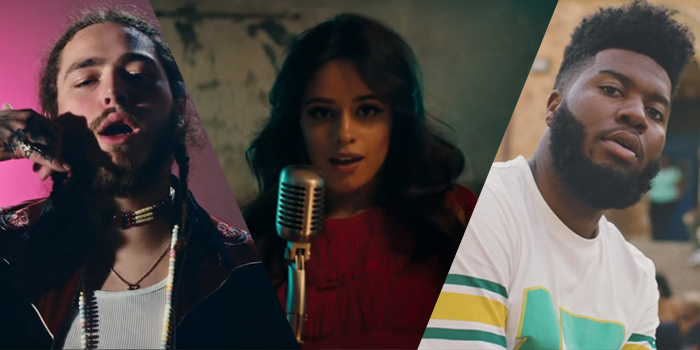
Will I get arrested for using "Havana" in my slideshow presentation?
No, you won't get arrested, but it's possibly an infringement.
See, there's this nifty little concept in most copyright laws around the world called Fair Dealing. It's designed to allow certain people to use copyrighted work, without authorisation, in situations that are considered reasonable. The United States uses Fair Use which is a little bit more extensive than Australia's version of Fair Dealing, but generally speaking, they have some important similiarities.
These 'fair' situations might be in educational settings, where profit isn't made; in academia and research as sources; or by journalists, who may also use Fair Dealing in order to report the news.
Even if you've purchased a song legally, you don't actually own the broadcast rights, so if you pop a video of you singing "Despacito" onto your Snapchat or Instagram stories, you could technically be breaching copyright law. But, without a recording or evidence of the infringement, there isn't much of a case against you. Still, this is how everyday actions can actually be considered infringements.
In short, if you're using a song like "Havana" in your slideshow presentation (although I can't imagine why), you might actually be breaching copyright law. Buuuut, provided you don't publish the presentation online, no one records your presentation and you don't sell your slideshow to anyone, it will be hard to prove in a court of law.
(Again, a reminder: We are not lawyers.)
When can you use copyrighted music without permission?
Copyright laws vary from country to country, so we'll just focus on fair dealing and fair use in the ones most important to us.
When you can use copyrighted music without permission in Australia (we live here!):
- When it falls under Fair Dealing, as mentioned above (though this is limited for sound recordings).
- When it can be considered satire or parody (also under Fair Dealing).
- When it is commentary or a review (like a movie review, perhaps).
- When the licence is "free". This type of licence usually comes with royalty-free music, which you can purchase for reasonable amounts and can use for commercial and published pieces.
When you can use copyrighted music without permission in the United States (where most of the copyrighted content we consume comes from):
- When it's parody or satire.
- When it's for educational, non-profit uses (though this is still a grey area).
- When it's a variation of a song that diverges significantly from the original, like a cover.
You can also use music where the copyright has expired. Copyright on creative works lasts for 50 years after the work was first published in Australia, and in the United States it lasts for 70 years.
If you're still not sure whether you can upload a video to YouTube of you lip-syncing to your favourite Rihanna song, watch the video below for some more information, or read this handy fact sheet by the Australian Copyright Council.
Photo: YouTube.com/CamilaCabelloVEVO & YouTube.com/PostMaloneVEVO & YouTube.com/KhalidVEVO & Student Edge

Comments & Feedback
Share your opinion
Emoji cheatsheet Formatting Comment guidelines