Five Ways to Support Young LGBTQIA+ Aussies During Pride Month (and Beyond)
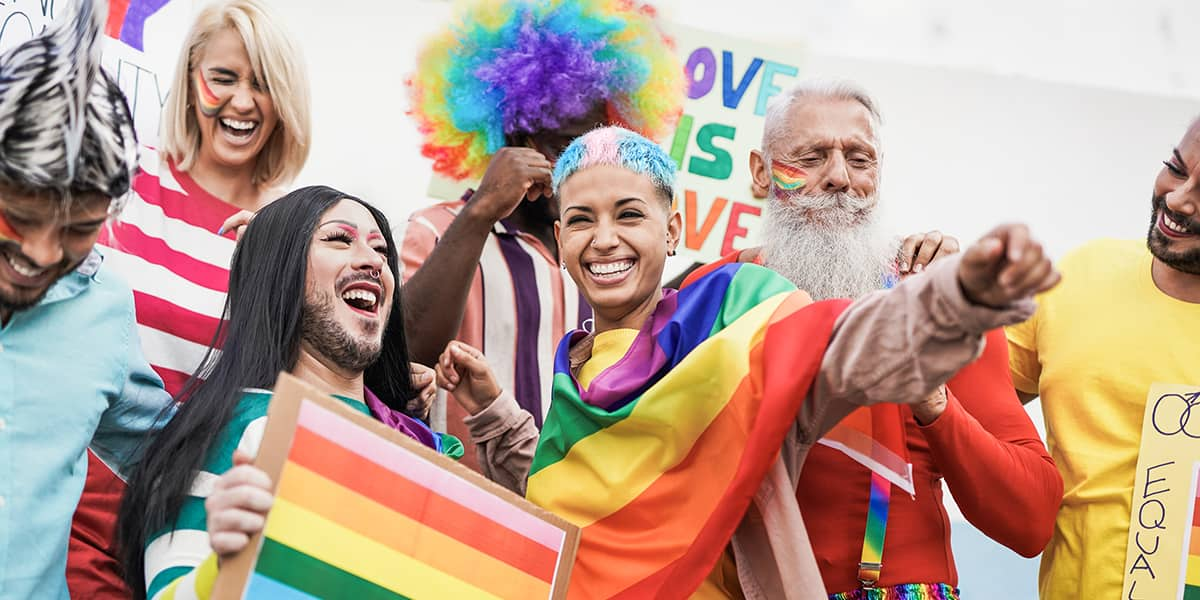
Trigger warning: this article discusses homophobia and transphobia.
Been wondering why your Instagram feed is full of more rainbows than usual? Well, it is that gloriously colourful time of the year called Pride Month.
To me, it’s a time to appreciate my friends, family and community, and reflect on just how far we have come.
Now, before you update your display pic with a rainbow backdrop, here’s five even more meaningful ways everyone can show support for LGBTQIA+ Aussies during this Pride Month (and every other day of the year!).
1. Show respect.
This may seem pretty obvious, but it is very easy to make a mistake. Coming to terms with your sexual orientation and/or gender identity can be challenging. It is an ongoing journey of personal discovery, and we often look to our friends and family (or allies) for support.
By using inclusive language and the right pronouns (he/him/his, she/her/hers, they/them/theirs), you can show your respect and validation for what your mate is going through.
You should avoid stereotypes and assigning heteronormative roles to any friends in a relationship. And if you’re ever unsure, just ask! Your mates won’t expect you to have the answer and are probably waiting for you to ask.
Normalizing the use of pronouns in everyday life is key to building a more inclusive environment for members of the LGBTQ+ community. This week, FIRST staff learned about normalizing pronouns & how sharing pronouns minimizes the risk of misgendering one another. pic.twitter.com/PUZDqMa9KQ
— FIRST (@FIRSTweets) June 23, 2021
2. Educate yourself.
Pride Month marks the anniversary of the Stonewall Riots in New York during 1969, where gay rights activist, fabulous drag queen, and trans woman Marsha P. Johnson led the charge against policy brutality and mistreatment. But even before the Stonewall Riots, LGBTQIA+ liberation was being led by trans women of colour and Black lesbians.
Marsha led the charge with three other beloved LGBTQIA+ women of colour Sylvia Rivera, Miss Major Griffin-Gracy and Stormé DeLarverie. They advocated against transphobia, anti-Blackness, and fought for all LGBTQIA+ people.
Similarly in June 1978, a group of 500 people from the Gay Solidarity Group gathered in Oxford St in Sydney and protested against police harassment. They’ve continued to come back every year since, only with a slightly different name: Sydney Gay and Lesbian Mardi Gras.
There are tonnes of resources out there to better understand the history and significance of this month. You should never stop making an effort to continue learning.
A color photographic slide of activist Marsha P. Johnson marching in a gay rights demonstration. 1982
— Black Trans Connection (@BlackTransConn1) June 23, 2021
PHOTOGRAPH BY
Dr. Simmons, Ron 📸 pic.twitter.com/uRhPSiZPID
3. Speak up.
Whilst we have come so far in society, we’ve got a long way to go. To be a true ally means to have your friend's back, so don’t be afraid to speak out if you hear something disparaging, rude or offensive, even if it’s not directed at your mate.
For a progressive country, Australia is still pretty far behind when it comes to properly recognising rights of LGBTQIA+ people. Marriage Equality in 2017 was a step in the right direction, however, large parts of the community (particularly trans people) still continue to be marginalised in society. That’s why it’s so important to continue speaking out and encouraging change.
There are ways that you can call out homophobia or transphobia if you feel comfortable and safe enough to do so. You can find some helpful tips on what to do here.
However, if you’re ever in a situation where you don’t feel comfortable or safe enough to speak up, do your best to remove yourself or the person being bullied from the situation and then check in on them or talk to a trusted adult for advice.
This Pride Month, the 78ers calling on NSW Parliament to reject One Nation’s Education Bill. Every student should have the opportunity to reach their potential, to learn with their peers and feel a sense of belonging in their school: https://t.co/BWgQJLaufr pic.twitter.com/7A0b47TMNw
— Sydney Gay & Lesbian Mardi Gras (@sydneymardigras) June 3, 2021
4. Volunteer.
Volunteering is so much fun! Research organisations and community events you can devote some time and support to, and really help to make an impact.
Official pride events like the Sydney Gay and Lesbian Mardi Gras will start recruiting volunteers this Spring (which you can find out more about here). Your local major cities or towns may even do their own version of Pride and are always on the hunt for enthusiastic like-minded people to help out.
During #Pride @MomsDemand volunteers are showing support for the LGBTQIA+ community in Maryland and across the country. #MomsAreEverywhere #Pride2021 #MDPolitics pic.twitter.com/FUatQTDUhp
— Nicole Hollywood (@BuzzNicki) June 22, 2021
5. Be there.
Hang out, grab a coffee, go for a walk, and do all the things you already do with your mates. Being inclusive is a very simple way you can be a great ally.
Nobody likes to be lonely, and it’s always harder when struggling with so much personal uncertainty. What helped me during my teenage years was having mates who always included me and consistently had a willing ear ready to listen
Learn about what it means to be an "ally" @youthengaged4change #happypridemonth #LGBTQIA #lovewins #genz #genzfilmarchives #genzdirectory pic.twitter.com/TF9VIHi3dB
— The Gen Z Collective (@tgzcollective) June 15, 2021
Here’s how you can find extra support.
For someone in the LGBTQIA+ community, while it sometimes feels like support or acceptance doesn’t exist—trust me—as someone who has wrestled demons multiple times over in my youth, support is there.
Friends and family are generally the first way to go. Someone will listen and give you the time. If you have a family member who identifies as LGBTQIA+, that's even better.
If you prefer something more discreet, most universities and schools offer counselling where you can get things off your chest.
If you need someone to talk to, @trevorproject is here. They are available 24/7 through phone, text, chat. Click the link in our bio to learn more.
— Vevo (@Vevo) June 23, 2021
⠀⠀⠀⠀⠀⠀⠀⠀⠀
▶️ https://t.co/6S0wNgXtoE pic.twitter.com/rg4dBfcuAY
Happy Pride!
Are you experiencing suicidal thoughts, sexual assault or domestic and family violence? Seeking to support someone who is? Call Lifeline on 131 114 or Kids Helpline on 1800 551 800.
Visit ReachOut to get support to help you with everything from everyday issues through to tough times.
Header Image: Sabrina Bracher via Getty Images
Topics
Ref: ed7179a0-008e-4e08-a2f7-ad51002abdfb






Comments & Feedback
Share your opinion
Emoji cheatsheet Formatting Comment guidelines