Let's Dispel the Student "Dole Bludger" Myth With the Help of Our Members
We asked our members how they use their Youth Allowance (and if it's indeed enough to live on).
Centrelink has had a pretty rough 2017 so far, what with the huge debt recovery scandal and all.
In January, it was reported that around 170,000 Australians had received debt notices from Centrelink since July of 2016. Many of the debts issued were entirely non-existent.
The climate around welfare has been particularly hostile as of late. In light of the automated debt recovery program, it appears the government is cracking down on sectors of society who are financially and socially vulnerable. (Pensioners and young Australians, many of whom are full-time students, were among the worst affected by the debacle.)
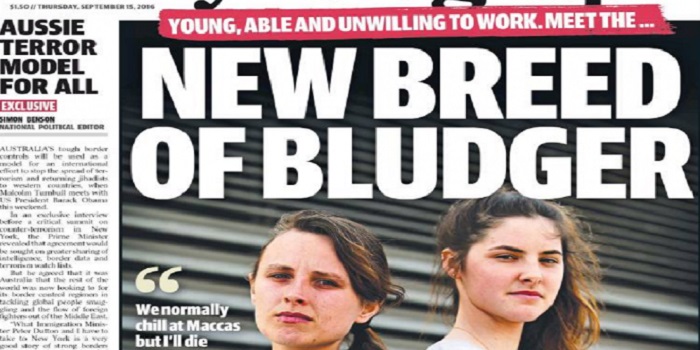
Despite this, it seems the myth of the young Aussie “dole bludger” still lingers.
(Technically, the dole refers to people on Newstart payments, but most people consider any form of government benefit as the dole. Let's carry on.)
A new welfare bill has just been introduced to parliament which, if passed, will make it so that anyone wishing to access Newstart must be 25 years of age. Until then, people will need to stay on Youth Allowance. We’ll leave it up to you to guess which one pays less. (Okay, it's Youth Allowance.)
Treasurer Scott Morrison has previously said anyone who is unemployed and refuses to take a job should not be offered the dole. His comments were in response to an article reporting up to 36,000 Australians had rejected job offers so they could stay on welfare.
But maybe it’s not as simple as young people being lazy or entitled. For some, it’s incredibly challenging trying to balance study with a job (or the job-seeking process).
In a survey of 722 Student Edge members over the age of 16, 19.5 per cent said they were on Youth Allowance. Of those students, 71.2 per cent thought the payment amount was fair, but only 22 per cent said it was enough to live off alone. Thirty-nine per cent said they work to supplement their welfare payments.
Rates for Youth Allowance differ depending on your circumstances. The average student over the age of 18 who is single, doesn’t have children and is living away from home gets a maximum fortnightly payment of $AU437.50.
“I think it’s ridiculous,” Kara Dobson, a full-time student on Centrelink’s Youth Allowance, told Student Edge.
“To get the payments you have to be studying full-time because they contact your uni to make sure you are studying.
“If you do [get Centrelink] it means you can work less, and actually focus on your studies… It makes a difference with your grades [and] when your grades are better, your internships are better, and your jobs [will be] better.
“You pay it all back in taxes in the end.”

Kara does her best to juggle her Bachelor of Commerce with working on the side at a Gloria Jeans coffee shop. “It’s a lot easier having Centrelink as well, because it means I can take time off for exams,” she said.
When asked where her money goes, Kara explained it’s usually on rent.
Lauren Harris, a full-time I.T. student, told us she’s looking for work but has been unable to find anything suitable for the days where she doesn’t have classes.
“I’m [at school] three to four days a week, and it’s right in the middle of the week, which is when people want you [to work].”
Lauren receives Youth Allowance (like Kara) and also has a Low Income Health Care Card. Medical expenses take out a sizeable chunk from her welfare income.
“At the moment, I’ve just been prescribed new medication… one bottle is $30,” Lauren explained. “My mum looks after the money and puts it towards bills and things I might need.”
She described the income she receives from Centrelink as “enough to get me to school and back; otherwise it’s just being saved.”
Lauren said some people may not know “just how hard it is” for students at TAFE and university to find jobs, simply because of their availabilities: “It’s just impossible when [they] can just hire someone straight out of high school, with full availability and [they can] pay them cheaper."

In our survey, 68.8 per cent of respondents receiving government benefits said they spend it on food. Forty-seven per cent of respondents also said they use the benefits to pay rent. Only 19.4 per cent said they needed it for entertainment.
Makes you wonder: Can we really call young people 'dole bludgers' if they’re relying on it to fulfil their most essential and basic needs?

We asked Centrelink what students should do if they have been rejected from receiving Youth Allowance. A spokesperson directed us to the reviews and appeals section of the Human Services website.
Photo: Giphy and iStock
Topics
Ref: a0d5fd4c-aefe-4591-b62a-a713005ec33d





Comments & Feedback
Share your opinion
Emoji cheatsheet Formatting Comment guidelines