"Call of Duty: Modern Warfare" Is Amazing, But Does It Gamify War Crimes?
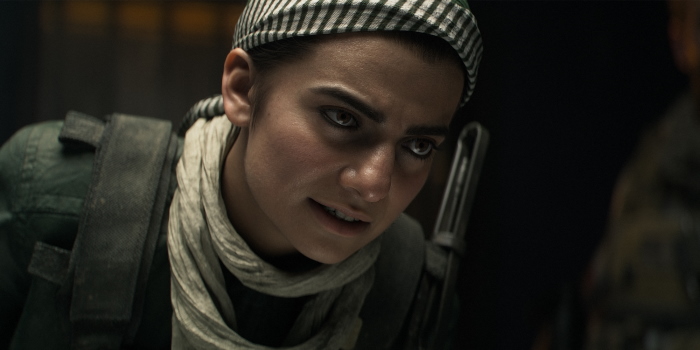
War is hell, and so is untangling the moral conundrums of Modern Warfare.
Call of Duty: Modern Warfare contains the most thrilling campaign this generation has seen. It also makes you choose between shooting and not shooting a baby, which is, y’know, messed up.
Spoilers ahead for the Call of Duty: Modern Warfare single-player campaign. Student Edge was provided a complimentary copy of the game by Activision. Some disturbing content and images below.
The not-quite-a-Sophie’s-Choice occurs in one of the game’s best stages, "Clean House", where you and your fellow SAS soldiers conduct a night-time raid of a Camden, London residence. You quietly climb the stairs and peek behind doors to assassinate a tucked away terror cell. In one room, you’ll find a woman frantically running to a crib. Trigger happy players might shoot before realising she’s just going to her baby, not to grab a weapon. If you let her live, she’ll coo the child peacefully. If you kill her, the baby cries, alerting others in the house to a disturbance. So, do you silence the baby?
No, of course not! How could you even think of it?! Oh, because the game led you into that exact scenario? Gotcha. I suppose it’s commendable that the game (eventually) makes it clear you shouldn’t cross this ethical line. Pull the trigger, the screen will just cut to black and let you know this kind of activity isn’t tolerated. Try it again and again, and it will just show you another black screen with the question: "Are you serious?" To that, you might respond: "It’s your game, bro."
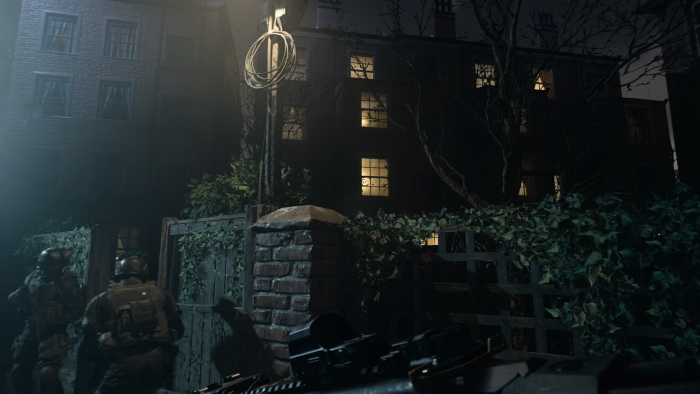
That’s how Call of Duty: Modern Warfare has its cake and eats it too; by gamifying moral conundrums (okay: war crimes) without rewarding you for the immoral options. The intention is to create teachable moments from within the fog of war. Still, is the COD franchise up to that task?
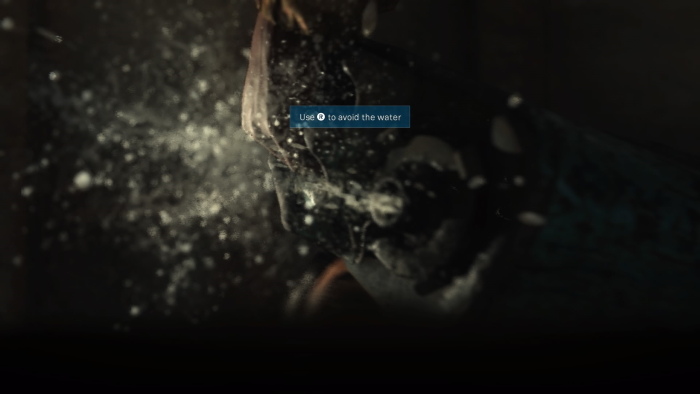
This is the same game that later tests players to survive interrogation and waterboarding by pivoting to avoid the water as the bucket is poured on your head. Phew, turns out surviving a vigorous round of EIT ain’t so hard. It also has a level called "Highway of Death" which is seemingly named after an American attack during the Gulf War, and is here done-over with Russian villains. I knew you could remake games, but atrocities?
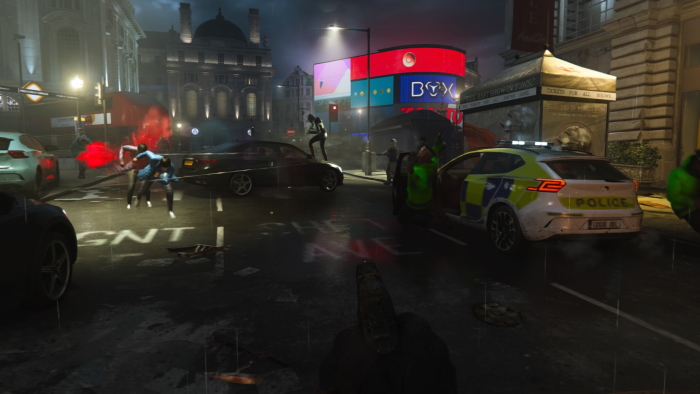
The recent release of Death Stranding once again reignited the debate around games that aspire to be artful. For years, the big problem was that "artful' games were really just lengthy cut-scenes that let you occasionally look in certain directions or make A/B decisions; they clearly wanted to be movies. Now, games like Death Stranding (which gamifies, um, walking) and Modern Warfare (which comes with an intensive "realism" mode) are all about 'game' experiences that emulate reality. That’s why it’s disturbing when an early stage has you chasing gunmen through Piccadilly Circus: not because it could happen, but because it makes it so fun to run-and-gun through a real nightmare.
The director of the game has argued that players want "moral complexity", and trusts them to be sophisticated enough to read into the history that Call of Duty is remixing for its narrative and larger themes. And in its defence, Call of Duty has indeed come a long way since the Modern Warfare brand debuted a decade ago, becoming more empathetic in its depiction of Middle Eastern people (this instalment even lets you get to play as freedom fighter Farah, from the fictional nation of Urzikstan, and see the violence of foreign occupation from her eyes). It’s also in service of a first-person shooter that is thoughtful, inventive and genuinely confronting. I especially liked the stage that mimicked the attack on America’s Iranian embassy (dramatised in Argo) where you instruct a hostage to escape through security cameras vision, as well as the flashback to Farah’s childhood, where she learns, under harrowing circumstances, to shiv an intruder.
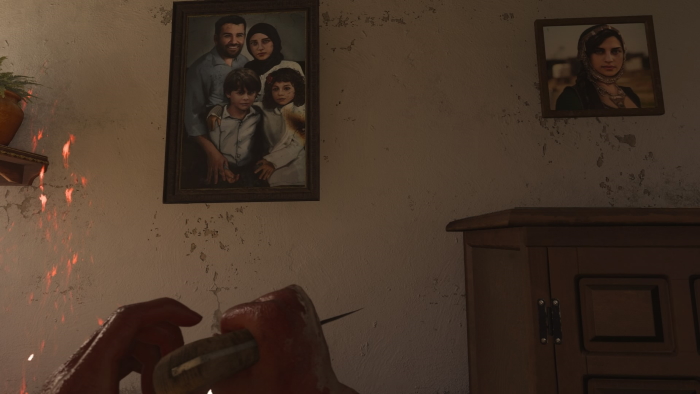
But is it acceptable, or even responsible, for a game (which, by definition, should still be fun, as this one is) to explore topics like genocide, torture and domestic terrorism? Does it invite players to consider the true toll of conflict by simply flashing notable quotes from Martin Luther King and Holocaust survivors in-between deaths? (One by Peter Ustinov lingers: "Terrorism is the war of the poor, and war is the terrorism of the rich.") And isn’t it a cop-out for a writer to pose a bunch of hypotheticals without answers? Hey, like Modern Warfare, I’m just here to ask the questions.
But, okay, I guess I too trust players will get Modern Warfare. The games community has not exactly earned the benefit of the doubt, but they’d have to actively misread this one to miss its anti-war message. And perhaps there’s no way to communicate it better than by embedding it in a fast-paced, rewarding and, above all, playable game. (Doing the opposite would probably be counter-productive). Some will shoot the baby; others won’t; no one will proceed without learning to let it live, and understanding that they can’t simply kick-open doors and fire at will if they want to win. Based on that lesson, I even found myself going back to previous checkpoints to save civilians and hostages, instead of simply spraying my AK-47. If you're gonna gamify war, I suppose that's the way to do it.
4/5
Call of Duty: Modern Warfare is now available on PS4, Xbox One and PC.
Header Image: Activision
Topics
Ref: a90f4b9b-0f00-4870-83bd-aafc001674e7
Most Popular



Comments & Feedback
Share your opinion
Emoji cheatsheet Formatting Comment guidelines
It's pretty cool to represent the true reality of war crimes. Shows us the true and realistic impact of war .