How to Tackle Back-to-School Anxiety, From a Mental Health Expert
Where the heck did the holidays go?
Most schools around Australia are back for the year - you might be starting your first year of high school, jumping back in for another year, or this might be your final year.
There’s plenty to be excited about, but with big changes like a new school, new classes, new teachers, new classmates… it can feel really overwhelming.
If these first few weeks have you feeling stressed, scared, or anxious (or all the above) – you’re not alone.

We spoke to headspace’s Head of Schools and Communities’ Kristen Douglas, to get some expert tips and tricks on looking after our mental health and creating a ‘toolkit’ for the new school year.
Anxiety Before Heading Back to School is Totally Normal.
This time of year can be a really daunting time for students of all ages, especially those in high school and uni. How common is it in young people to be feeling anxious this time of year, and what can that anxiety look like?
“Everyone goes through a space of change at the start of the year, it's regardless of whether you're going back to an environment that you know, or a new environment.
I think this year is particularly important that we support people because we're coming off the back of lots of change in the last few years and lots of disruption, and disconnection.”
Kristen explained how important it is to recognise how we are travelling with our mental health, and how important it is set ourselves up to tackle the year ahead.
“[We] need young people to be aware about how they're feeling and be okay with putting their hand up and going, “I'm actually not feeling okay.” And that requires a whole range of little micro skills behind it.
Often, we wait too long [to ask for help]. If you think about this continuum of zero to 10 - 10 being high levels of distress and stress… we wait until we're like eight or nine level of distress before we go... “I'm not feeling okay, I really need help.” And actually, we could have done it back at five or six, or even four, and been a bit more preventative about it.
So right now is a really good time to go, “if I know I'm gonna have ups and downs this year, have I got a good toolkit of strategies? And who are my people?”
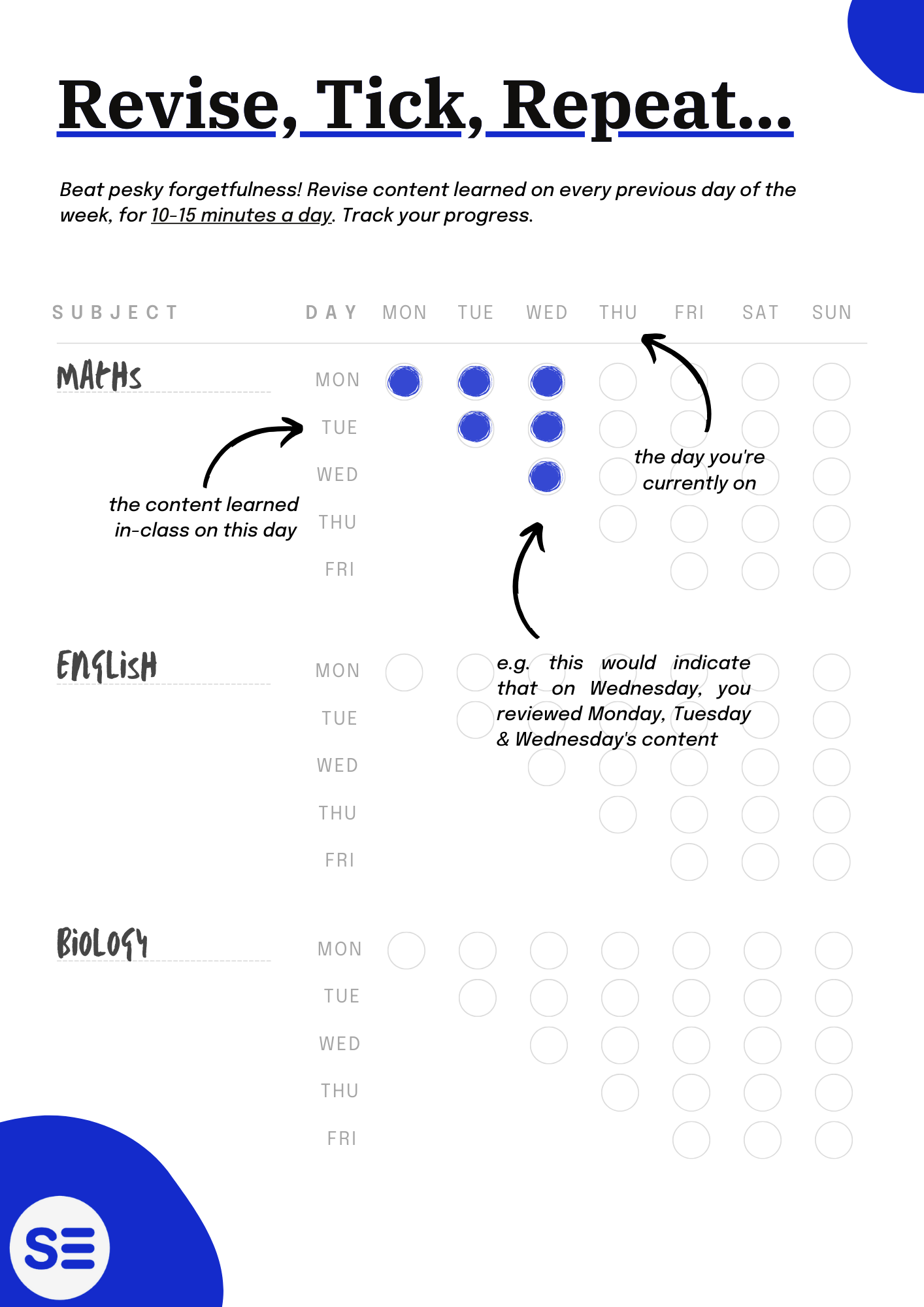
Utilising a planner to help you organise your assignments and study sessions is a great way of staying on top of stress.
Recognising Signs of Anxiety and Being in the Moment.
The anticipation leading up to the first week of school can get the better of us, and may take us away from enjoying the rest of our holidays - even the weekends leading into a busy new week may take us out of the moment.
Kristen states that any kind of change – good or bad – does have some kind of nervousness attached to it, so its important to recognise what these signs may look like. For example, it may be a lack of sleep or ‘busy’ internal dialogue.
“Young people need lots of sleep because when you start a new school, when you start a new group of mates, it's really emotionally draining. Whether it's good experience or not, it's actually really tiring. Check your awareness on how you're responding to stuff. There's lots of things you can do right now to practice calming yourself down… calming your internal dialogue down because often, we go into a space and we're a little bit anxious about it. But actually, it's all of the head noise that doubles down on that or makes it even worse.”
So what are some ways we can combat this?
Kristen suggested a few apps including Smiling Mind, Headspace (no relation to this headspace organisation!) and if you don’t mind paying for an app - Calm.
“They help you with breathing and circular breathing… they help you with sleep time stories. They help you with walking mindfulness sessions, body scans, all that sort of stuff. So mindfulness and meditation are great strategy to get used to at the start.”

Creating a Strong ‘Toolkit’ – Externalising Emotions and Having ‘Anchors’.
One of my favourite phrases I heard Kristen using during this interview was ‘having a toolkit’ – a foundation of skills, tips and tricks that we can use to track and recognise how’re we’re feeling and what to do when– as Kristen calls it – feeling ‘wobbly’.
Kristen talked about the importance of expressing how you’re feeling, and talking to someone close to you can help us process these emotions - but she knows it’s easier said than done.
She suggested journalling as an alternative to help externalise those thoughts and feelings to ‘help offset them and shake them off at the end of the day’.
It’s also important to never underestimate the benefits of exercise and eating healthy. “When we feeling wobbly, we eat more sugar, we often exercise less. We let go of all the good things that takes care of us - I call them anchors.”
‘Anchors’ are things in our routine we can’t go without that makes us feel well and balanced, and if we were missing them we would be feeling lost.

She made me think of an anchor in my life, which I recognised as one of them as playing with my kittens when I come home at the end of the day.
“The busier you get; do you start doing less of that?” she asked me.
I felt a bit guilty when I realised – yes, I do find myself not spending time with them as much as I’d like to!
“Little behaviours, these little anchors… help you stay grounded and safe and balanced throughout the year. When we get busy, when we get overwhelmed with the volume of homework and study, when we get stressed, we tend to let go of a lot of these things that are actually the very core things we need to stay well and balanced.
Think about your anchors at the start of the year and go, “in order to have a really good mental health and well-being space this year, I need to maintain exercise, I need to maintain mates and connection.
Then every month, check yourself - am I doing that? Or have I let them go? Am I neglecting it? So I think it's more just like a self-awareness check.”

Kristen shared a great analogy of thinking of our mental-health like an iPhone battery – when we see our battery getting low, we never let it get to the point where it just shuts off, so we try and find the best way to recharge it. The same goes for our well-being.
Recognising signs when your battery is low might include feeling on edge, withdrawing from people and developing bad habits – this is a good time to check on your anchors and see if you might have let some of them go.
Tackling Anxiety While at School.
While these tips are incredibly helpful to us when we’re in the comfort of our own home and in our safe space, I asked Kristen what we can do while at school, and if we start to feel stress and anxiety during class.
Some of these tips include:
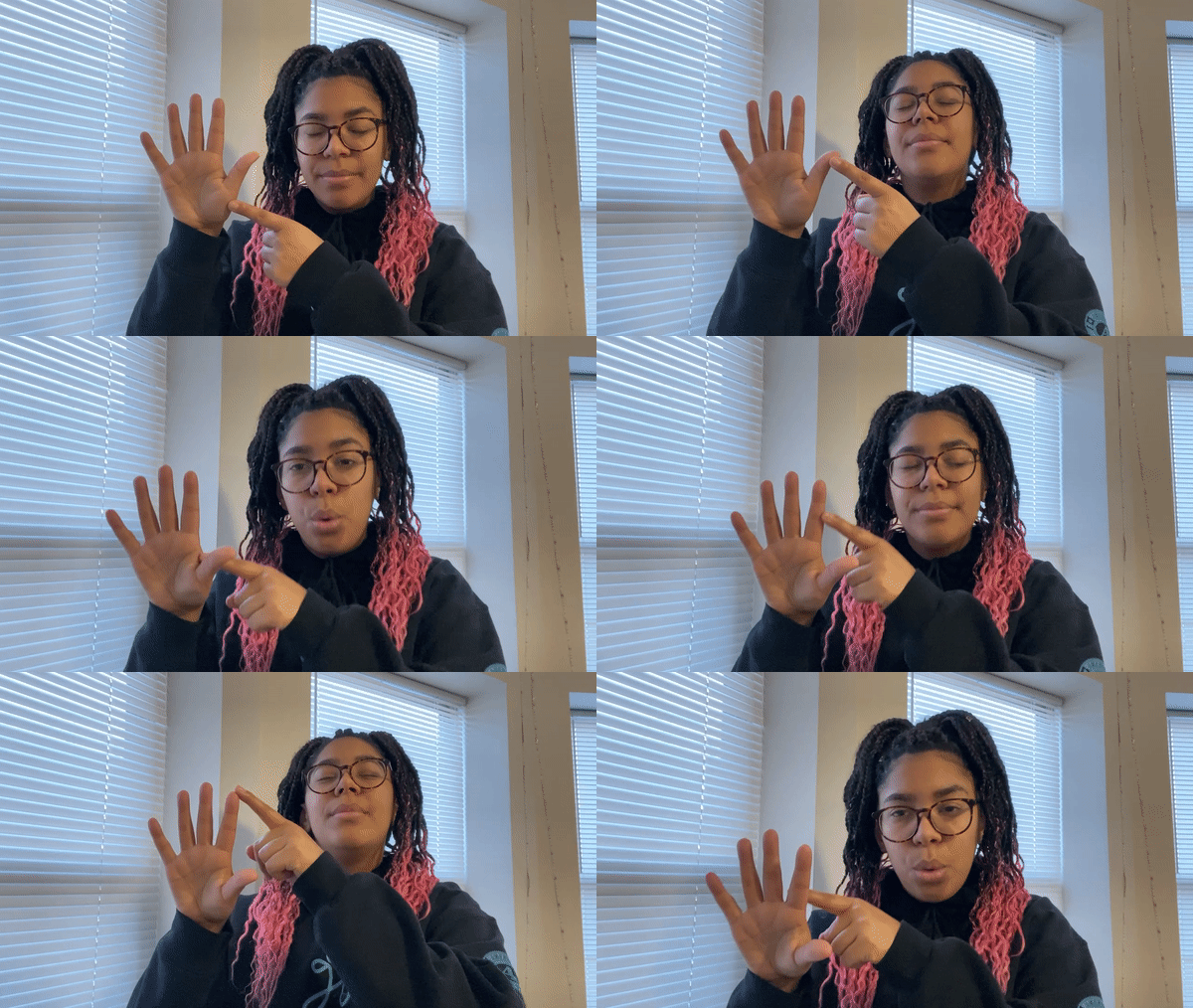
- Tracing the outside of your hand with your finger.
- Breathing exercises. (e.g. slow deep breath in for four counts, and exhaling slowly for four counts)
One exercise Kristen got me to try during the interview is a grounding technique she referred to as ’5-4-3-2-1’, which uses the five senses. I had to find:
- 5 things I can see.
- 4 things I can feel.
- 3 things I can hear.
- 2 things I can smell.
- 1 thing I can taste.
She explained that using this technique is a great short way to give you time to regulate yourself and calm you down.
What To Do When You or Someone You Know Needs More Help.
Building a ‘toolkit’ is a great way to build a foundation to help you in school this year. But what if anxiety, stress and other factors are still continuing to impact your life after these first few weeks?
"If you're feeling really anxious and worried, then I would say maybe think about leaning into a proactive conversation with a social worker, a psychologist, someone at school, someone at the nearest headspace centre. You don't want to, you know, start the year and not have that person. It might be just meeting them, or walking into the nearest headspace centre and going 'oh, this is kind of a nice lobby, it's not too bad'."
Kristen talked about two skills that everyone should learn to master – ‘help seeking’ and ‘help receiving’.
‘Help receiving’ is exactly how it sounds – allowing to receive help from others. If someone recognises that you’re not doing well, having yourself open up and allow help is a skill in itself.
Kristen explained that ‘help seeking’ can be the trickiest skill and works both for yourself and towards others.
For yourself, its important to recognise that you need help. Are you ditching your anchors? Is your battery low? Check in with yourself. If you recognise any red flags, it would be your sign to reach out and ask for help.
For others, ‘help seeking’ is recognising changes in your friends and the people close to you. Have they started rocking up late to school? Are they withdrawing from your social circle? It’s important to check in and create conversations – asking someone only ‘are you okay’ won’t always do the job.
Find ways you can rephrase asking ‘are you okay?’ that will encourage them to open up. For example, Kristen says “if I said to you right now, ‘if I had a magic wand, what would you tap in your life to make it a better?’ - people will lean into that.”

“I really want to normalise for young people - Everyone is feeling a bit wobbly at the moment, whether it's by one degree or by 20 or by 100 degrees. Everyone has felt a little bit weird and a little bit somewhere on the continuum of impacted from the last couple of years. So I really want to normalise it that it's okay to feel a bit wobbly about the last couple of years, and add on top of that the stress of starting a new school, or add on top of that.
But all of this stuff is manageable. With good little tips and strategies and stuff, none of it's unmanageable, and I think everyone's gonna feel wobbly. So you're not alone. It's normal to feel wobbly.”
If you need some extra help in the organisation department, download our FREE revision checklist. It's got everything you need to keep track of what you've revised for each class.
If you or anyone you know needs help, support is available now. Call Lifeline on 131 114 or Kids Helpline on 1800 551 800. Visit ReachOut to get support to help you with everything from everyday issues through to tough times.